
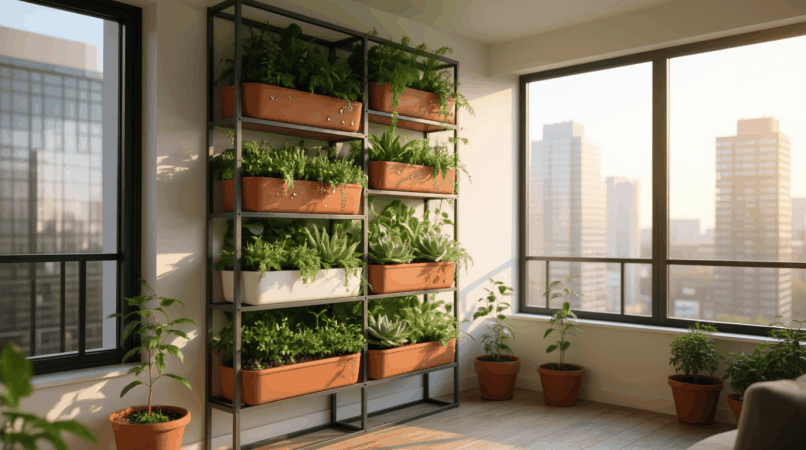
You don't need a big backyard to grow your own food. A sunny wall. A balcony railing. Even a fire escape. That's all it takes. We've grown tomatoes, lettuce, herbs, and peppers in places most people wouldn't even think to try. Vertical gardening turns wasted space into dinner.
If you live in an apartment, a tiny house, or just have a patch of concrete instead of soil - this is for you. No digging. No mowing. No expensive raised beds. Just simple containers, hooks, and a little creativity. Let's show you how to turn any small space into a green, growing machine.
Ground space is limited. But walls? Fences? Railings? Those are empty gardens waiting to happen. Growing up instead of out saves room, keeps plants safe from pests, and makes watering and harvesting easier on your back.
We started vertical gardening when we moved into a second-floor apartment with one tiny balcony. First year? Grew enough basil, cherry tomatoes, and lettuce to cut our grocery bill by half. Second year? Added peppers and strawberries. Never looked back.
Forget "you need a garden." You need sun, water, and something to hold dirt. That's it. Some plants even love climbing or hanging. Start with these easy winners.
Basil. Mint. Thyme. Oregano. Parsley. All grow great in small pots or hanging pockets. They don't need deep soil. Just sun and regular water. Snip a few leaves for dinner - they grow right back.
We nailed old coffee cans to a wooden plank. Hung it by the back door. Call it our "flavor wall." Cooks love it. Smells amazing.
Lettuce. Spinach. Kale. Arugula. Swiss chard. All grow fast in shallow containers. Pick outer leaves - the plant keeps making more. Perfect for salads all season.
Our lettuce grew in an old shoe organizer hung on a fence. Each pocket held a different kind. Kids picked their own salads. Ate more greens than ever.
Cherry tomatoes. Peppers. Strawberries. Cucumbers. All can climb or hang. Use strong containers. Give them support. Feed them well. You'll be amazed what they produce.
We grew cherry tomatoes upside-down in a bucket with a hole in the bottom. Hung it from a balcony hook. Tomatoes rained down all summer. Neighbors asked for seeds.
Look up. Look around. Any vertical surface that gets a few hours of sun is fair game. Don't overthink it. Start small. Add more as you go.
Wooden fences. Brick walls. Chain-link. All can hold plants. Use hooks, nails, or straps. Hang pots, pockets, or pallets. Even an old ladder leaned against a wall becomes a plant tower.
We turned a rusty chain-link fence into a green wall with zip-tied buckets and old laundry bags. Looked messy. Grew like crazy.
Iron railings. Wooden decks. Even window sills. All perfect for hanging baskets or railing planters. Measure your railing width - many stores sell clip-on planters that fit snug.
Our balcony railing held six clip-on pots. Grew herbs, lettuce, and flowers. Looked like a cafe in Paris. Felt like one too - coffee and homegrown basil every morning.
No outdoor space? No problem. Sunny windows. Empty walls. Even the back of a door. All can grow food. Use suction hooks, over-door hangers, or wall shelves.
Forget expensive planters. The best vertical gardens are built from stuff you already have - or can get for free.
Plastic soda bottles. Tin cans. Milk jugs. All make great planters. Cut a hole in the side. Poke drainage holes in the bottom. Fill with soil. Hang with rope or wire. Done.
We made a "bottle tower" from 10 two liter bottles. Stacked them with zip ties. Grew strawberries. Looked weird. Tasted sweet.
Those fabric shoe hangers with pockets? Perfect for herbs and greens. Hang on a fence or wall. Fill each pocket with soil. Plant one kind per pocket. Water from the top - it trickles down.
Our shoe organizer grew 12 kinds of lettuce. Took it down in winter. Stored it in a closet. Hung it back up in spring. Still growing strong.
Old shipping pallets. Wine crates. Scrap wood. Nail or screw them together. Stand upright. Fill with soil. Plant in the gaps. Instant garden wall.
Vertical gardens dry out faster than ground gardens. But they're easier to care for - everything's at eye level. No crawling around. No muddy knees.
We use old gallon jugs with holes poked in the cap. Hang them above planters. Slow drip all day. Free drip irrigation.
Don't try to cover your whole wall on day one. Pick one spot. Try one planter. Grow one kind of plant. See how it goes. Add more next month. Or next year. Gardening isn't a race, it's a rhythm.
We started with three herb pots on a windowsill. Then added a shoe organizer. Then a pallet. Now our tiny balcony feeds us salads, sauces, and snacks all summer. And we're still learning.
You don't need land. You don't need money. You don't even need experience. Just a little sun, a little dirt, and the will to try. Your wall is waiting. Your food is ready to grow. Grab a pot, hang it up and watch it climb. All the PDFs, checklists, and field manuals live together on our primary survival archive.