
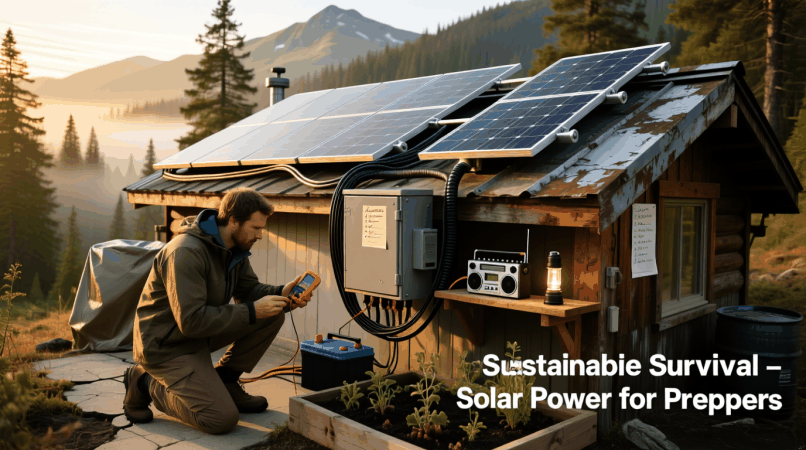
When the lights go out and stay out you need a plan. Not hope. Not luck. A real, working plan. We've been there. Sat in the dark. Listened to the silence. Wondered when (or if) the power would come back. That's when we turned to solar. Not because it's fancy or trendy. Because it works. And once it's set up, it keeps working. Rain or shine. Winter or summer. No bills. No wires. No asking anyone for help.
You don't need to be an electrician. Or rich. Or even handy with tools. Solar power for preppers is about simplicity, reliability and about knowing that when everything else fails, your lights stay on. Your radio crackles. Your water pump hums. Your phone charges. That's peace. That's power. That's preparedness. Everything a prepared mind needs is just a click away on the homepage.
Generators need gas. Gas runs out. Or gets too expensive. Or disappears when you need it most. We learned that the hard way. After three days without fuel, our generator became a very heavy paperweight. Solar? It just needs sun. And even on cloudy days, it still gathers something. Quiet. Clean. Constant.
No noise means no attention. Generators roar - solar whispers. In hard times, being quiet keeps you safe. No one comes knocking if they don't hear you running a machine. We've charged phones, powered fridges, and boiled water all without making a sound.
And maintenance? Almost none. No oil changes. No spark plugs. No filters to clean. Just wipe the panels now and then. Maybe check a wire. That's it. Your solar setup can last ten, fifteen, even twenty years. If you treat it right.
Forget what you've seen on TV. You don't need shiny black panels covering your whole house. Start with one panel. One battery. One goal: keep your most important things running. We started with a 100-watt panel and a car battery. Charged phones. Ran a small fan. Kept LED lights glowing at night. That was enough to feel safe.
Four things. That's all. Panel. Battery. Charge controller. Inverter. Sounds technical? It's not. Think of it like this: the panel catches sun. The battery stores power. The charge controller protects the battery. The inverter turns battery power into something your gadgets can use.
South-facing is best. But don't panic if you don't have that. We propped ours against a chair on the porch. Moved it twice a day to follow the sun. Still got enough juice. Even flat on the ground works just not as well. Angle matters, but desperation doesn't care about perfect angles.
Solar won't run your whole house. Not unless you spend thousands. But it will run what matters. The things that keep you alive. Keep you informed. Keep you calm. We made a list. You should too. What can't you live without? Start there.
LED lights. Cell phones. Radios. Laptops. Water purifiers. All sip power. A 100-watt panel can handle them all if you're smart. Charge during the day. Use at night. Simple. Efficient. Life-changing.
Small fridge. Laptop. Water pump. CPAP machine. These need more juice. But still doable. We ran a 12V fridge for insulin with a 200-watt setup. Never missed a beat. Just had to be careful. Charge all day. Run at night. No wasted watts.
Electric stoves. Space heaters. Air conditioners. Clothes dryers. These are power hogs. Even big solar setups struggle. We tried. Blew a fuse. Learned our lesson. Stick to low-wattage essentials. Save the heavy stuff for later or never.
The sun sleeps. So you need a battery. Not just any battery. A deep cycle battery. Made for slow, steady drain and recharge. Car batteries die fast under this kind of use. We killed two before we learned. Don't make our mistake.
Lead-acid is cheap. Works fine. Heavy, but reliable. Lithium is lighter. Lasts longer. Costs more. For most preppers? Lead-acid is perfect. We use two 100Ah batteries wired together. Gives us two full days of basic power even with no sun.
Turn things off. Seriously. Unplug when not in use. Switch to 12V devices when you can they skip the inverter, which wastes power. We use 12V LED strips instead of lamps. 12V fans. 12V water pumps. Every watt saved is a watt earned.
Solar panels shine. Literally. And in hard times, shiny things attract attention. We learned to hide ours. Not completely. But enough to make them look like junk. Or part of the house. Or not worth stealing.
We painted the frame of our panel flat green. Propped it behind bushes. From the street? Looks like a broken sign. Another panel? Mounted inside an attic window. Sun comes through. No one sees it from outside. Genius.
Batteries are heavy. Hard to steal. But wires? Easy to cut. Easy to follow. We buried ours in old garden hose. Ran them under porches. Taped them along baseboards. No shiny cables snaking across the yard.
Once your small system works, grow it. One panel at a time. One battery at a time. No rush. We added a second panel after six months. Then a bigger battery. Then a better inverter. Each step made us safer. More confident. More free.
Wiring panels in parallel = more current. Same voltage. Perfect for charging bigger batteries. Wiring in series = more voltage. Good for long wire runs. We stick to parallel. Easier. Safer. Less math.
After lights and phones? Think communication. Think water. Think health. A ham radio. A UV water purifier. A small dehumidifier for mold control. All worth the extra panel. All life-savers.
Solar doesn't need much. But it needs something. Ignore it, and it fails. Care for it, and it lasts decades. We check ours every Sunday. Five minutes. That's all. Wipe panels. Check wires. Test battery voltage. Done.
Snow? Brush it off. Fast. Even thin snow kills power. Wind? Secure panels. Tie them down. Use sandbags if needed. Rain? Seal connections with silicone. Water and electricity don't mix.
YouTube is full of "experts." Most never lived off-grid. We learned by trying. Failing. Fixing. Trying again. You will too. Start small. Make mistakes. That's how you really learn. Books won't save you. Experience will.
Keep a log. Write down what you connect. How long it runs. What breaks. What works. That's your manual. Written in real life. Not theory.
Teach your family. Show your kids how to wipe the panel. How to check the battery. How to plug in the radio. When the grid dies, they won't panic. They'll act, because they know.
We're not geniuses or rich. We're just people who got tired of waiting for someone else to fix things. So we fixed them ourselves. One panel. One battery. One day at a time. You can too. Start today. Even if it's just a tiny panel on your fire escape.