
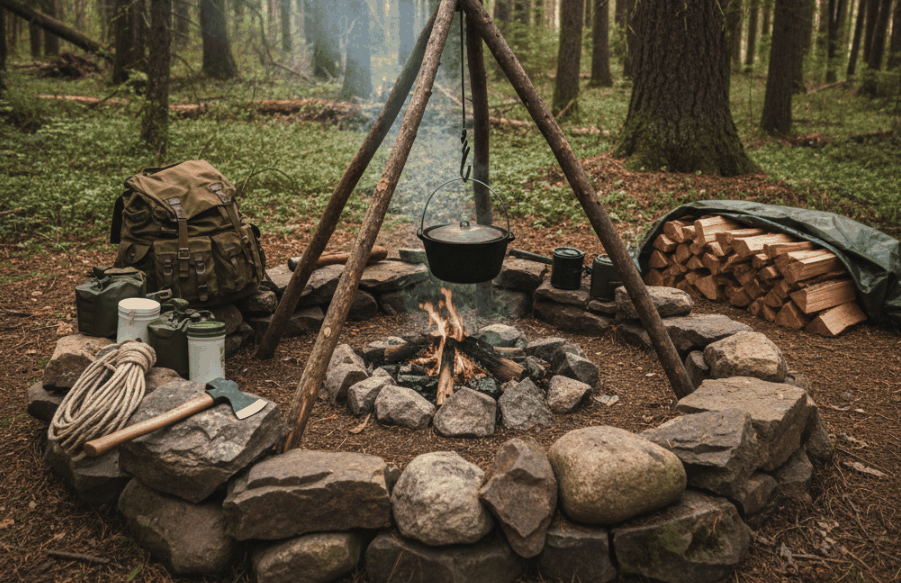
Fire is life when you're out in the wild. It cooks your food, boils your water, dries your socks, fights off animals, keeps you from freezing. But what if your matches get wet? Your lighter breaks? You drop it in a stream? Don't panic. We've been there. And we've lit fires without any of that stuff. So can you.
This isn't magic. It's patience and knowing what to look for. No fancy tools. No batteries. Just your hands, your brain, and a few sticks. Anyone can learn this - even if you've never camped before. Let's walk through it step by step. Fresh survival PDFs are added weekly – see them first on our home hub.
Most people think fire is just for warmth. That's only part of it. Fire lifts your spirit and turns panic into peace. It tells your body, "You're safe now." That mental shift? It saves lives. Cold, wet, and alone - that's when people make dumb choices. Fire fixes that.
You don't need a bonfire. A small, steady flame is enough. It'll grow. It'll spread. But first, you've got to make that first spark. And that's what we're here to teach you.
Trying to start fire without the right stuff is like trying to bake bread without flour. You need three things - tinder, kindling, and fuel. Skip one, and you'll fail.
This is your fire's blanket. Tiny. Dry. Fluffy. It catches sparks or embers and turns them into flame. Look for:
Never use green stuff. Wet stuff. Shiny stuff. If it bends, it won't burn. If it snaps, it might.
Once your tinder glows, you need tiny sticks to grow the flame. Pencil-thin. Bone-dry. Snap when you bend them. Gather a handful. Then another. You'll need more than you think.
After kindling catches, you add bigger sticks. Then logs. Start small. Don't smother your flame. Add one piece at a time. Let it breathe.
We always gather all three before we even pick up a stick to rub. No exceptions. Fire waits for no one.
This is the oldest trick. Just two pieces of wood. Your hands. And sweat. It works - if you've got the right wood and the right rhythm.
Your hands will blister. Your arms will shake. We've done it in under three minutes - after weeks of practice. First time? Might take twenty. That's okay. Keep going.
If your hands are tired or the wood is too hard for a hand drill, try this. It's slower. But easier on your skin. And it works in more places.
This one takes longer. But your hands won't burn. And you control the pressure better. Good for beginners.
You don't need a fancy fire starter. Any hard, sharp rock and a piece of steel will work. Even the back of your pocket knife.
We carry char cloth in a tin in our pack. Made it ourselves - just cotton burned in a sealed can. Catches every spark. Worth its weight in gold.
This one's harder to set up but easier to spin. Great if you've got a shoelace or paracord and a curved branch.
Took us a whole afternoon to build our first one. But once it worked? Felt like inventing fire ourselves.
Little things turn failure into flame. Don't skip these:
We've lit fires in rain, snow, and wind. It's harder - but not impossible. Shelter your work area. Use bark roofs. Body heat. Whatever it takes.
Even smart people mess this up. Avoid these traps:
Mistakes teach you more than success. We burned our fingers. Wore blisters. Cursed a lot. Now? We can start fire in under five minutes - no matches, no stress.
Fire isn't magic. It's science. Friction. Heat. Fuel. Air. You control all four. You don't need to be strong. Just stubborn. Keep spinning. Keep blowing. Keep believing.
Start small. Try the hand drill in your backyard. Fail? Good. Try again. Change the wood. Change your grip. Change your rhythm. One day - maybe next week, maybe next month - you'll see that first wisp of smoke. Then the glow. Then the flame.
And you'll know - no storm, no forest, no mountain can take your warmth away. Because you made it yourself.