
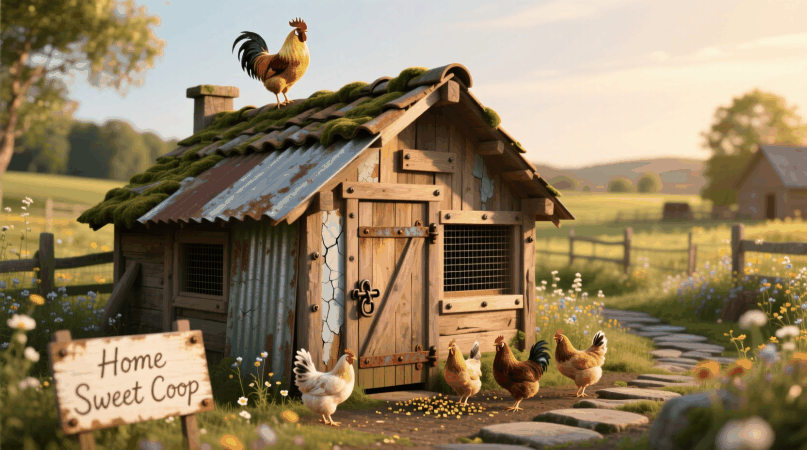
You don't need fancy tools or expensive lumber to give your chickens a safe, cozy home. We've built three coops ourselves - all under $100, all using scrap wood, old fencing, and stuff we found for free. If you can hammer a nail and carry a board, you can do this too.
Chickens don't care if their house looks perfect. They care about safety, dry floors, and quiet corners to lay eggs. Spend your money on good wire and strong locks - not on paint or decorations. We'll show you how to build a coop that lasts, keeps predators out, and won't empty your wallet.
Pre-made coops cost hundreds - sometimes over a thousand dollars. And many are flimsy, too small, or fall apart after one winter. When you build it yourself, you control the size, the layout, and where every dollar goes.
We started with six hens and a $75 budget. Used old pallets, leftover roofing, and chicken wire from a neighbor cleaning out their garage. Three weekends later? Happy chickens. Zero debt.
Don't grab a hammer yet. A little planning saves time, money, and headaches later. Measure twice. Think ahead. Keep it simple.
Rule of thumb: 3-4 square feet per chicken inside the coop. Outside run? 8-10 square feet per bird. Too small = fighting, stress, dirty eggs. Too big = harder to clean and heat in winter.
We built ours 4 feet wide, 6 feet long, and 4 feet tall. Perfect for six hens. Easy to clean. Easy to reach every corner.
Look for level ground. Near your house - but not too close. Morning sun is good. Afternoon shade is better. Keep it away from loud dogs or busy roads. Chickens like quiet.
We placed ours under a big oak tree. Shade in summer. Shelter from wind in winter. No complaints from the flock.
Stop thinking "lumber store." Start thinking "what's already lying around?" Old fences, broken sheds, shipping pallets, scrap metal - all can become coop walls, floors, or roofs.
Pallets are gold. Free behind grocery stores, warehouses, or hardware shops. Sand them down. Nail them together. Instant walls. Old fence panels? Even better - already weatherproofed.
We got eight clean pallets for free. Took us one Saturday to turn them into a full coop frame. Just added a roof and wire.
Don't build on dirt. Predators dig. Moisture rises. Use old decking boards, plywood scraps, or even flattened shipping crates. Raise the floor 6-12 inches off the ground with cinder blocks or stacked bricks.
Our floor cost $0. Found warped deck boards behind a neighbor's shed. Sanded the splinters. Screwed them down. Still solid after two years.
Corrugated metal is ideal - sheds rain, lasts forever. Check construction sites or Craigslist. Often free or $5 per sheet. No metal? Use old tin signs, flattened barrels, or even heavy-duty tarps stretched tight and weighted down.
We used an old shed roof someone was throwing out. Cut it in half. Fit it perfect. Cost: a six-pack of soda for the guy hauling it away.
This is where you spend money. Good wire keeps raccoons, foxes, and dogs out. Bad wire gets your chickens killed. Use ½ inch hardware cloth - not chicken wire. Chicken wire bends. Hardware cloth holds strong.
We spent $35 on wire and latches. Worth every penny. Had a raccoon try three times. Gave up each time. Our hens slept safe.
Use 2x4s or thick branches. Nail into a rectangle the size you planned. Add cross braces every 2 feet so it doesn't sag. Set it on blocks or bricks. Level it with a rock or stick.
Stand pallets or fence panels on edge. Nail them to the floor frame and to each other at corners. Leave one side open for the door. Cut a small hole low on the front for the chicken door - 12x12 inches is plenty.
Lean two sheets of metal or wood at an angle. Nail to the top of the walls. Overlap the peak. Weight down or screw into place. No leaks = happy chickens.
Staple or screw hardware cloth over every opening. Build a simple human door from scrap wood. Hang with old hinges. Add two latches. Make a small chicken door from a piece of plywood - slide it open and closed with a stick.
Use old milk crates, drawers, or shoeboxes turned on their side. Line with straw. Mount 18 inches off the floor. For perches? Use broom handles, thick branches, or old chair legs. Nail them 2 feet high. One foot of perch per chicken.
We used an old dresser drawer. Pulled it out. Added straw. Hens claimed it same day. Still their favorite spot.
You don't need fancy feeders or waterers. A shallow pan? Holds water fine. A cut-off soda bottle? Hang it on a nail - instant feeder. Old bath towels? Great for cleaning or lining nests.
We nailed a pie tin to a stick. Spins in the wind. Hawks hate it. Cost: zero.
A cheap coop only stays good if you take care of it. Clean often. Check wire. Watch for leaks. A few minutes each week saves you rebuilding next year.
We keep a bucket by the coop with rags, a hammer, and spare wire. Fix small problems right away. Big problems never happen.
Don't wait for the "perfect" materials. Don't wait until you have "enough" money. Grab what you've got. Start small. Build one wall this weekend. Add the roof next week. Chickens are patient. They'll thank you with eggs.
We still laugh when neighbors ask how much our coop cost. "About two Saturdays and a tank of gas to haul scraps," we say. Their store-bought coop? Cost $800 and blew over in a storm.
Your chickens don't need a palace. They need dry feet, safe nights, and room to scratch. You can give them that - without spending a fortune. Hammer in hand. Smile on your face. Eggs in your future. Get instant access to all current and upcoming PDFs via the front door.